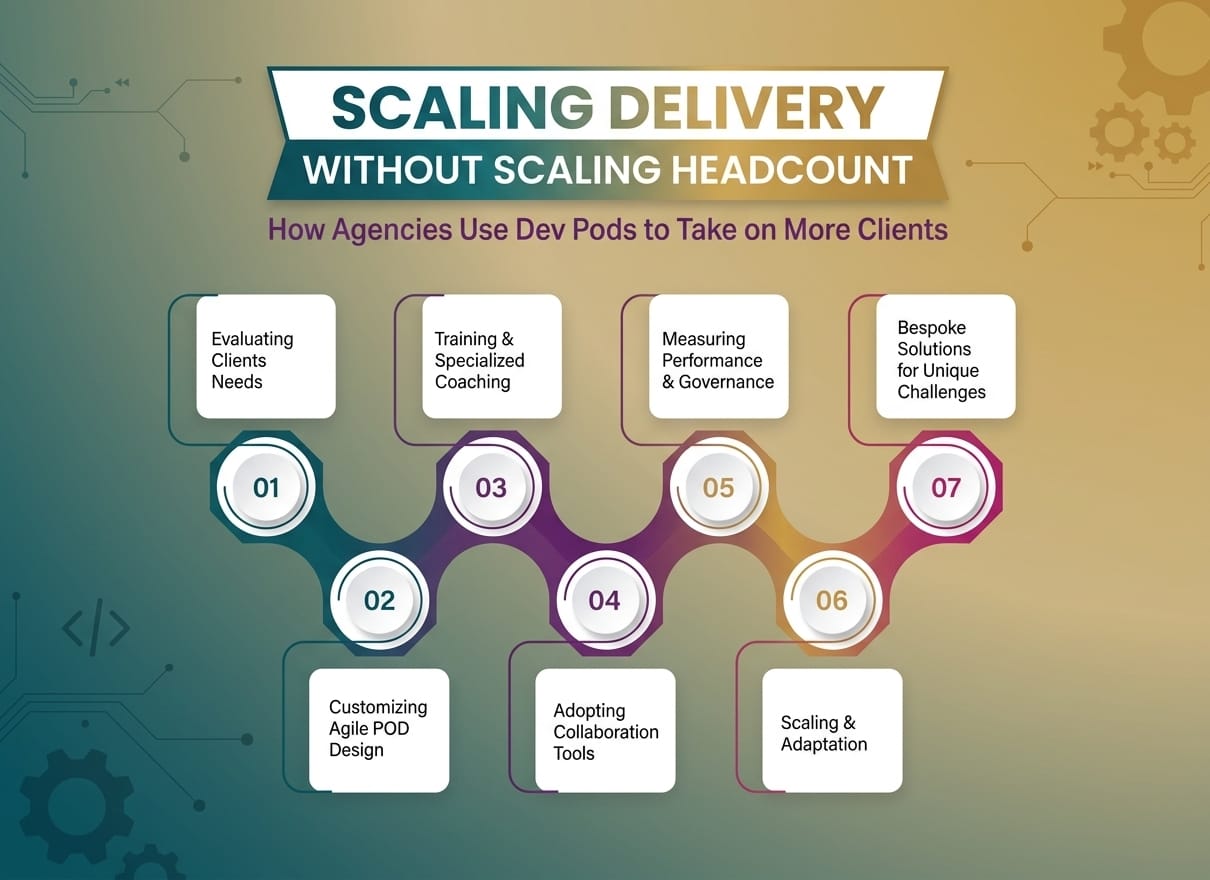
Why “developers test their own code” stops working
Developers testing their own work has an inherent blind spot: they test the paths they expect to work, because that’s how they built the feature. Bugs live in the paths nobody thought to check — the edge case where a user enters an email with a plus sign, the mobile viewport where a modal doesn’t scroll, the checkout flow when a discount code and a gift card get applied together.
This works fine at small scale, on small projects, with low stakes. It breaks down as your agency takes on more concurrent client projects, more complex applications, and more clients who expect (reasonably) that what you ship works the first time.
What a bug in front of a client actually costs
The direct cost of a bug is small — a quick fix, a redeploy. The indirect cost is what actually hurts: a client who watches something break during a demo or discovers it themselves in production starts quietly questioning your agency’s competence, even if the fix takes ten minutes. That doubt compounds. The next scope conversation gets harder. The next contract renewal gets a second look. Trust, once dented, is expensive to rebuild, and it rarely gets rebuilt through explanation — only through a track record of things not breaking again.
What dedicated QA actually adds, concretely
Automated regression testing. Every time a developer ships a new feature, there’s risk of breaking something that used to work. Automated test suites catch this before it reaches a client, running the same checks every time without human fatigue or forgetfulness.
Structured manual testing for what automation can’t catch. Visual bugs, UX friction, edge cases that require judgment — a dedicated QA engineer thinks adversarially about a feature in a way developers, focused on building it, structurally don’t.
Faster release cycles, not slower ones. Counterintuitively, adding QA usually speeds up delivery rather than slowing it down, because catching bugs before a client sees them eliminates the slow, awkward cycle of client-reported bugs, re-explanation, re-fix, and re-deployment that eats far more time than upfront testing would have.
Cross-device and cross-browser coverage. Agency clients — especially e-commerce and DTC brands — have traffic across a wide range of devices and browsers. A dedicated QA engineer systematically checks this instead of relying on “it worked on my laptop.”
The math on adding this role
A dedicated QA/Automation Engineer runs $2,500-3,200/month — one of the more affordable Dev Pod roles, because it’s a role many agencies underweight relative to its actual impact. Compare that to the cost of even a handful of client-facing bugs per quarter: the redo time, the reputational cost, the account manager hours spent smoothing things over. For most agencies running more than two or three concurrent projects, dedicated QA pays for itself in avoided rework alone, well before you count the trust preserved.
When to add this role specifically
The signal is usually one of these: you’re running three or more concurrent client projects and quality is starting to feel inconsistent across them; a client has flagged the same category of bug more than once; your developers are spending a noticeable chunk of their week on bug fixes instead of new feature work; or you’re about to take on a client with genuinely higher stakes — a bigger brand, a mission-critical application — where a visible bug would be a real problem, not just an annoyance.
How it fits into a Dev Pod structure
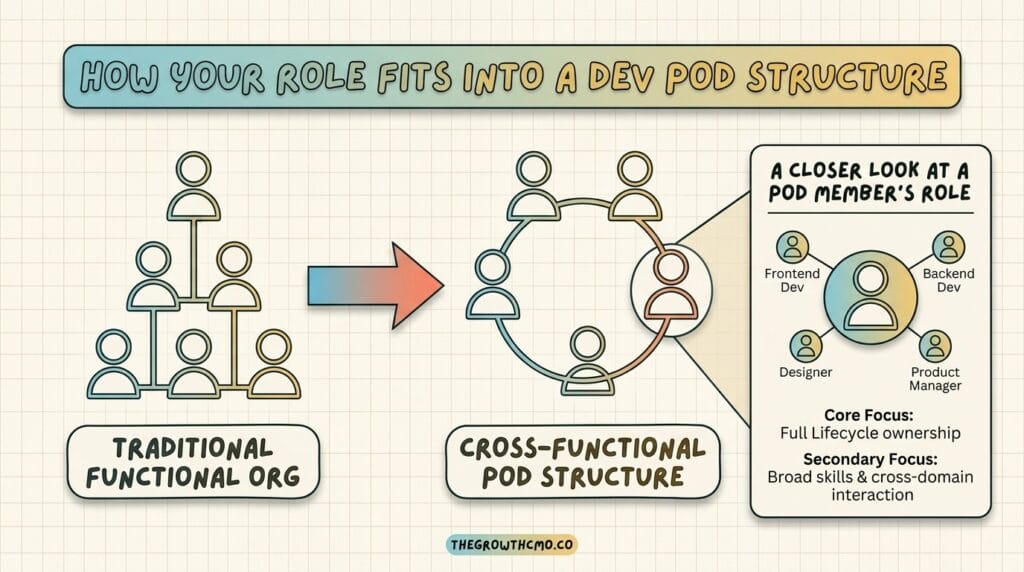
A QA/Automation Engineer works best paired with your existing development capacity rather than standing alone — reviewing the output of your MERN, Node, Vue, or mobile developers, building out automated test coverage for the applications already in flight, and acting as the last checkpoint before anything reaches a client. In a Dev Pod model, this person joins your existing standups and sprint process the same way a developer would, just with a different focus.
CTA: Book a 15-minute call and we’ll show you 2-3 QA/Automation Engineer profiles who can start within a week — see the full process at nextpak.org/agencies.