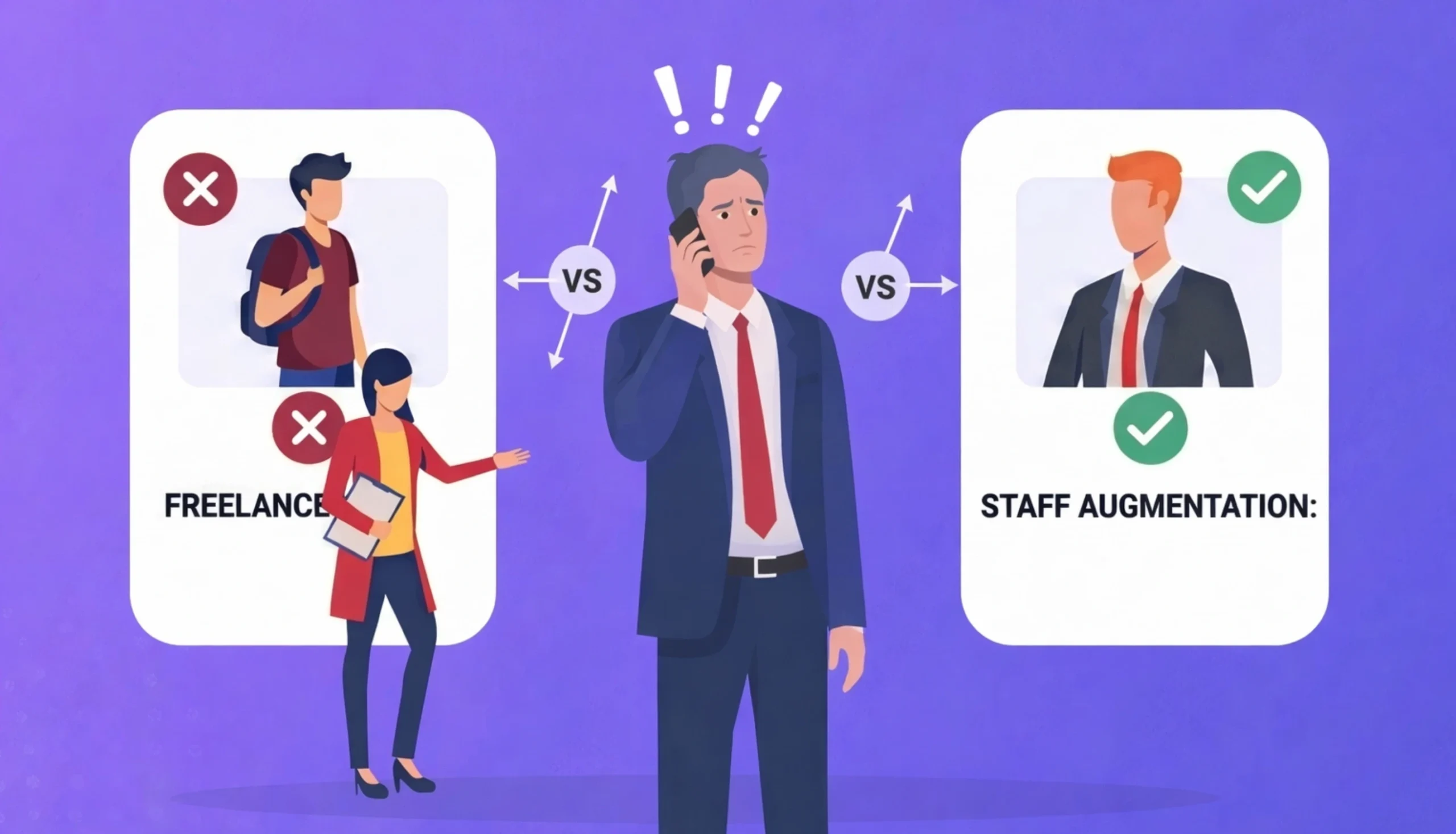
The freelancer scenario: small, bounded, one-off
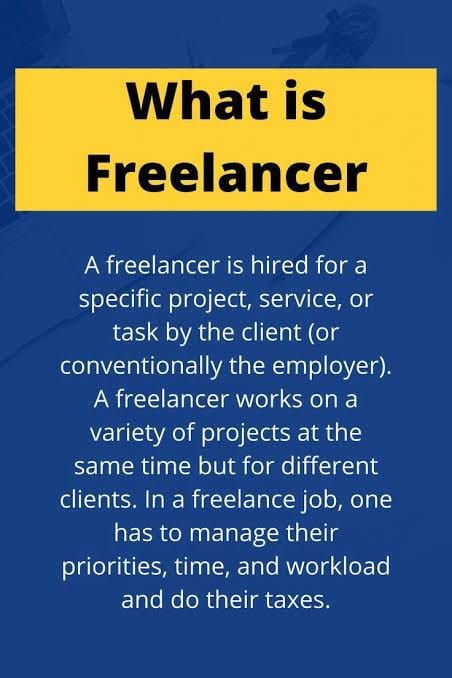
A freelancer is the right call when the work is small, well-specified, and unlikely to need ongoing iteration. Think: a one-time landing page, a specific bug fix, a script that automates a report. You know exactly what “done” looks like, the scope won’t shift mid-project, and you don’t need this person again in three months.
The failure mode with freelancers shows up when agencies use them for anything bigger than that. A freelancer juggling multiple clients has no obligation to prioritize you when something urgent comes up on another gig, and there’s no structural backup if they disappear. For a one-off task, that risk is manageable. For a client-facing retainer project, it’s not.
Cost: Typically lowest hourly rate, but highest variance in reliability and quality.
The dev shop scenario: full ownership, less visibility
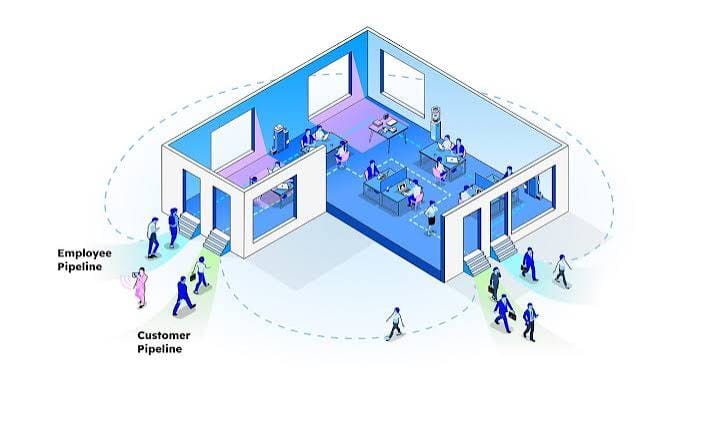
A dev shop (or outsourcing firm) makes sense when you want to hand off an entire, well-defined project and don’t need day-to-day involvement — for instance, a fixed-scope internal tool your agency needs built for its own operations, where the client isn’t involved at all.
The tradeoff: you’re paying for their PM layer and their margin on top of the actual development cost, and you lose granular control over how the work gets built. If your priorities shift mid-project — which happens constantly in agency work, where client feedback reshapes scope — you’re renegotiating rather than just redirecting.
Cost: Usually higher than dedicated staffing once PM overhead and fixed-bid risk premiums are factored in, especially for anything with unclear or evolving scope.
The dedicated developer scenario: ongoing, client-facing, needs to feel like your team
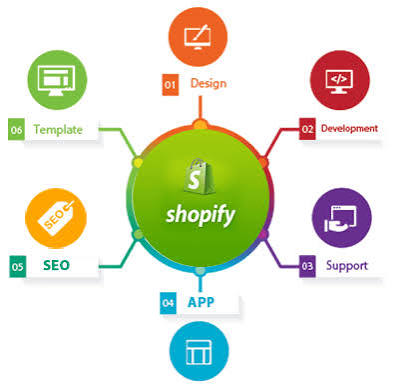
This is the right model when you have recurring or ongoing dev needs tied to actual client relationships — a Shopify retainer, an app that needs continuous feature development, an integration that needs monitoring and iteration. You need someone embedded in your process: your standups, your Slack, your ticket system, taking direction from your delivery lead, potentially interfacing indirectly with the client.
A dedicated developer isn’t split across five other clients. They’re yours for the engagement — full-time, timezone-aligned, working your hours. That continuity is what makes white-label delivery possible: the client experiences consistent quality and communication because the same person (or pod) is building their thing every day, not a rotating cast of freelancers.
Cost: $2,500-4,800/month for most roles depending on seniority and stack — meaningfully below a local hire, with far more continuity and accountability than a freelancer.
A practical way to decide
Ask yourself three questions about the work in front of you:
Is this a one-time deliverable or an ongoing need? One-time, well-scoped — freelancer. Ongoing, client-facing, needs consistency — dedicated developer.
Do I need day-to-day control, or just the finished output? Need control and visibility — dedicated developer. Just need the output and don’t care about process — dev shop.
How much does continuity matter to the client relationship? If the client would notice or care about inconsistent quality or communication — dedicated developer, every time. Continuity is the whole value proposition of staff augmentation.
The scenario most agencies get wrong
The most common mistake: using a freelancer for what should be a dedicated developer engagement, because it feels lower-commitment upfront. An agency lands a client who wants ongoing app development, hires a freelancer to start, and three months in is dealing with slow response times, inconsistent code quality across sessions, and a growing sense that the client relationship is at risk — all because the staffing model didn’t match the actual shape of the work.

If you know going in that a client relationship is going to require sustained, consistent development over months, structure the staffing to match from day one. A dedicated developer costs more per month than a freelancer’s hourly rate might suggest, but the total cost of ownership — accounting for consistency, communication, and reduced management overhead — is usually lower.
What NextPak’s model is built around
Every Dev Pod placement is a dedicated developer, not a freelancer moonlighting between other gigs and not a black-box dev shop project. They work full-time on your engagement, in your timezone overlap, inside your tools — which is what makes white-label agency delivery actually work.
CTA: Not sure which model fits your current need? Book a 15-minute call, describe the project, and we’ll tell you honestly whether a dedicated developer is the right fit — or if it’s not. See our profiles at nextpak.org/agencies.