Mistake 1: No evaluation harness before launch
The single most common mistake is shipping an LLM feature with no systematic way to measure whether it’s working. Teams eyeball a few outputs, decide it “looks good,” and ship. Then a prompt tweak three weeks later silently degrades quality on cases nobody’s looking at, and nobody notices until a customer complains.
The fix: before launch, build a test set of 30-50 real input examples with expected outputs or acceptance criteria, and run it every time you change the prompt, model, or retrieval logic. This doesn’t need to be fancy — a spreadsheet and a script that scores outputs against criteria is enough to start. The point is having a regression test for a system that doesn’t behave like normal software.
Mistake 2: Trusting the model’s context window instead of testing it
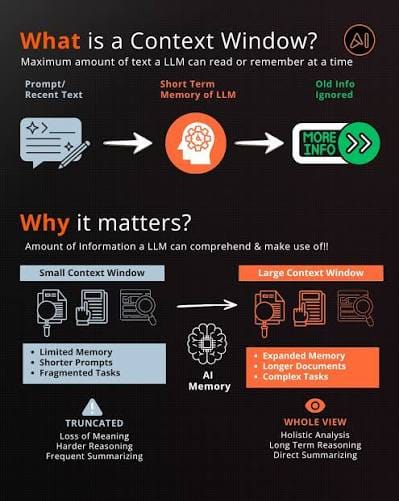
Model providers advertise huge context windows — 128K, 200K, even 1M+ tokens — and teams assume that means the model reliably uses everything in that window well. It doesn’t. Model performance on information buried in the middle of a long context is measurably worse than information at the start or end, a well-documented effect sometimes called “lost in the middle.” Teams that dump entire documents into context and expect uniform recall get burned.
The fix: don’t rely on context window size as a substitute for good retrieval. Retrieve only the relevant chunks, put the most important information near the start or end of the prompt, and test recall explicitly on long-context cases rather than assuming it works because the token count fits.
Mistake 3: No fallback for API failures or rate limits
OpenAI, Anthropic, and Google APIs all have outages, rate limits, and occasional latency spikes. Startups that wire a single API call directly into a critical user flow with no fallback ship a feature that goes fully down whenever the provider has a bad day — which happens more often than most founders expect.
The fix: build retry logic with exponential backoff, a timeout with graceful degradation (show a sensible error, not a spinner forever), and ideally a fallback model or provider for critical paths. If a feature is core to your product, don’t make its uptime entirely dependent on a single vendor’s uptime.
Mistake 4: Ignoring prompt injection and treating LLM output as trusted
If your product lets user input reach an LLM prompt, and that LLM has any ability to take actions (call a function, query a database, send an email), you have a prompt injection risk. A user — or a malicious document your RAG pipeline retrieves — can embed instructions that hijack the model’s behavior. Teams that treat LLM output as inherently safe and pipe it directly into downstream systems without validation are exposing a real attack surface.
The fix: scope tool permissions tightly (an LLM answering support questions shouldn’t have a function that can delete records), validate and sanitize any LLM output before it touches a database or downstream system, and treat retrieved document content as untrusted input, same as you would user input in a traditional web app.
Mistake 5: Optimizing cost and latency after launch instead of during design
Teams build a feature using the biggest, most capable model available (usually GPT-4o or Claude Opus-tier) because it’s easiest to prototype with, ship it, and then get a nasty surprise when the API bill scales with usage. Retrofitting cost optimization after launch — routing simple queries to cheaper models, caching repeated queries, trimming unnecessary context — is more painful than designing for it from the start.
The fix: build a routing layer from day one that sends easy queries to a cheaper/faster model (GPT-4o-mini, Gemini Flash) and reserves the expensive model for cases that need it. Cache aggressively where inputs repeat. Track cost per request as a first-class metric alongside latency and accuracy, not an afterthought you check when the invoice arrives.
The pattern underneath all five
Every one of these mistakes comes from treating LLM integration like a normal API integration — wire it up, ship it, move on. LLMs are probabilistic, they fail in different ways than deterministic software, and they need evaluation, guardrails, and cost discipline built in from the start, not bolted on after a production incident.
CTA: If you want a second set of eyes on an LLM feature before it ships, bring it to a short scoping call at nextpak.org — we’ve caught these exact issues in client codebases more times than we can count.